Saturday, December 19, 2020

Twenty Twenty - My Year in Review

 Here we are coming to the end of the worst year in recent history.  I don't want to write about what we all know...the pandemic, riots, shortages, weather extremes, fires, job losses, deaths.  These things are devastating and we've all been finding our own ways of coping.  Instead, my year in review is about what I've tried to accomplish in my quilting.  

I attended a retreat our guild put on in January.  While there, I worked solely on a quilt for a friend. 


I loved how this one came together.  I used William Morris fabrics and FMQ an all over meander pattern.  

At the end of March, the National Quilt Museum's Block of the Month facebook group finished up round 2.  I received a special label for being one of 1,000 people finishing their quilt.  


Amazing blocks by some inspiring quilters were presented each month with their techniques.  I added some embellishments like embroidery and applique to some of my blocks giving it a South Carolina theme.  


The National Quilt Museum facebook group didn't start round 3 in April as in the past two years, instead they chose to do a Quilt Along for 6 months finishing in October.  They started off with a center star pattern and worked out from there adding borders.  I chose a Patriotic theme so I could gift it to my DH for Christmas.  


This quilt measures about 62" square and is a good lap size.  It was sent to a friend to quilt for me in a star and wave design from edge to edge.  I attached the binding and the label on the back is hand written with details and the Air Force song.  The back is pieced with an Eagle and flag panel, navy blue and the label.  
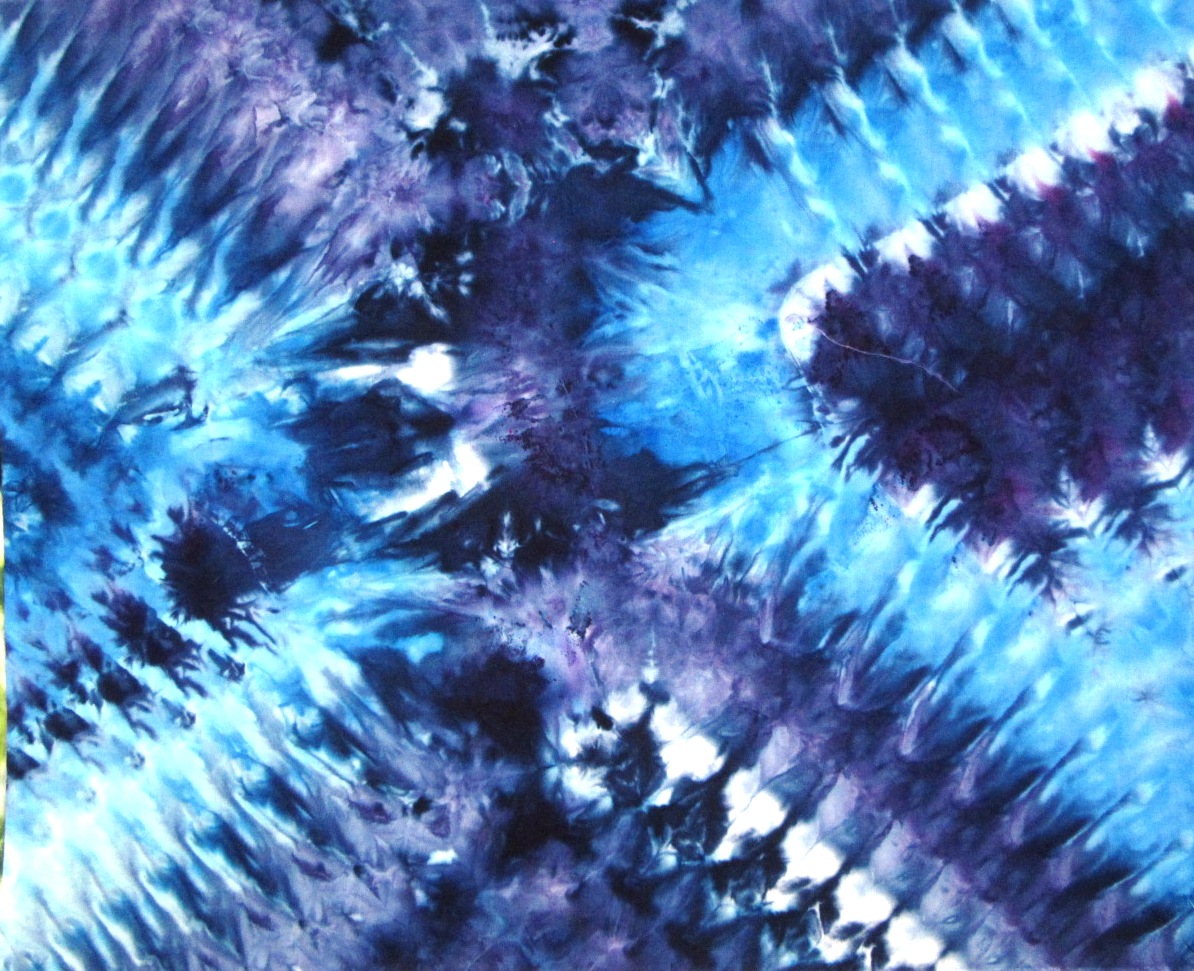
I also had long bouts of ice-dyeing and even taught a couple people, socially distanced, in my home to do this technique. 

I had two students who made these pieces.   They did quite well for their first time at dyeing. 

These pieces I did at intervals trying different dyeing techniques and ties.  My favorites are here.  I also sold some pieces to friends and guild members.  


Every Christmas I try to craft something new.  This year, I found instructions to make sock Gnomes, so I made a few and posted previously about them.  

I've also made some ornaments for our trees.  After all this, there's no wonder why I'm a little burnt out on quilting and crafting.  I'm taking a break for the next few weeks left in this year.  

The American Patchwork & Quilting facebook group will be starting the next UFO challenge for 2021 starting in January.  You can find out more HERE

I am waiting until after Christmas to make my list.  That will be a good time to clean and arrange my studio before starting the next project.  

Thursday, December 17, 2020

Catherine's Wheel and more


Easy to make Catherine's wheel ornaments using just 12 - 2.5" squares of fabrics and a padded pillow center measuring 3" diameter to attach the folded squares to.  Fold each square corner to corner, then again and again so you have the raw edges on one side only.  This is the side that is attached to the pillow.  Straddle the triangle over the edge of the pillow and tack in the center through to the other side.  I usually tack it there twice.  Move on  to the next triangle alternating colors if that's your desire.  Adjust each point so they are fairly equal distance from each other.  Tack the center well.   Add a button to hide your tacking stitches and attach a hanging string inside one of the straddled edges.   Sometimes I use a small dot of hot glue to secure the inside triangles. I've been busy this year with making small ornaments and projects to use up my scrap stash.  Seems like I make more scrap in the process.  

Turn a fabric hexagon into a folded star ornament by cutting out a hexagon twice the finished size needed.  Mark the center of the hexagon and the centers of each straight edge.  With a needle and thread knot through the center of the hexagon and pull thread through each center mark of the straight edges.  Pull tight and push down slightly.  This will pull up the hexagon and you'll have petals that will be folded downward and tacked into the center.  Tack each one down into the center point and attach a button or bead to cover your stitches.  

These mug mats are easy to make up.  Sew strips to a square foundation in your color choices.  Add some details to their face.  Use stitching to embellish the beards or features.  Square up add some batting and a fabric backing.  Quilt and embellish with buttons or embroidery stitches.  These are so cute and went together fast. 

Every Christmas I try to make ornaments or useful items like mats for my table.  It gets me in a cheerful mood and brightens up my décor.    
Happy Christmas and happy sewing.  :o) 


Saturday, November 21, 2020

Sock Gnomes

 Every year I decorate the house around the second week in November.  This year is no different and actually, because of the lockdown, I was more excited than ever to get some cheerful decorations up.  There are a lot of patterns and ideas out there and some are free.  Here is a Gnome decoration I modified slightly.  You can use any supplies you have on hand.  I don't like to spend a lot of money on homemade decorations.  Use up some left over yarn or wool scrap for his beard and hat.  


Start by raiding your husband's (clean) sock drawer, somewhere in there he's hoarding a holey pair that would be a perfect Gnome.  Tube socks are the longest and would make the tallest Gnomes.  You can also use dress socks, maybe an old holiday pair with a print.  Don't use shorter socks.  I used a mid-calf pair that had holes in the toes.  By the way, you can make 2 Gnomes from one sock. 


Cut one sock about 7", save the rest for a slightly smaller Gnome.  Now you'll have an open ended tube.

Sew the non-ribbed end shut by turning inside out and hand stitched or machine stitch closed.  Turn right side out.  Stuff the bottom with about a cup or so of crushed nut shells, rice (freeze for a couple hours to kill any bugs) or poly pellets.  Stuff the remainder with poly-fill stuffing or I used leftover batting scrap.  


You don't have to stuff too firmly as it may be hard to fit the hat on and the hat may sit too tall and pointed.  I like the slouchy look.  Using kitchen string, carpet thread or yarn; tie the top of the sock tightly.  

For the beard, I used bits of sheep wool from a farm I lived next to for years.  You can use fake fur, white cotton batting bits, wool felt, yarn or craft stores sell Santa beard fiber.  Using a hot melt glue gun, carefully start gluing your beard bits on.  I use a pencil to hold it on a few seconds to avoid burnt fingers.  Apply your hat with hot glue up to the beard and slightly angled to the back.  

I used an old pair of crocheted socks for 2 of the hats and holiday print cotton fabric for the other two.   If you're using a knitted or crocheted pair of socks for the hats remember if you cut them into a shape, they will unravel like crazy and probably not be useable.  I just turned them inside out and machine stitched a triangle by laying the sock flat measure by eye how tall you want the hat to be and sew from the right edge angling as you sew to the left edge.  Do not cut away the rest, even if it's tempting.  Turn right side out, poking around to make the tip of the hat a little pointed and the extra is not too bunched up.  This will add a little weight to the hat and make it slouch nicely.   


For the nose, you can use a large bead, wood ball, pompom, make a stuffed round piece from cotton or knit fabric.  I have loads of buttons, some have shanks which work really well.  You can tack the button in place with thread, but my glue gun was still hot, so I glued them.  


This is the other half of the sock.  Examine for holes and repair them before stuffing with pellets and scrap. 
Tie the top and trim off the excess sock as this will be hidden within the hat, but the excess may make the hat sit too tall.  Or try it if you want that look.  Make them your own, add some embellishments like buttons, beads or cinnamon sticks.   I think this was such an easy fast (literally took minutes) project/craft for the holiday and one more plus...I would say kids could join in making these.   Enjoy!  

Friday, September 18, 2020

Mini-Quilt swap - Retrospect


When I signed up for the Modern Quilt Guild swap I thought it would be a good experience.  Taking someone else's likes and dislikes and translating that into a mini quilt for them.  I went through the process in the stages set out for us.  We were not allowed to show our progress.   Working blind and only communicating through social media is harder than you may think.  I can't see or feel the quality or up close details of their work.  It is hard to see if what they are saying matches what they are doing in a blind piece of work.   We had 5 months to finish our swaps and get it to the recipient.  Some opted to hand deliver at QuiltCon, but my swap partner and I chose to mail them to each other.  It was exciting to see what she would come up with from the spec sheet I submitted.  The day came, it arrived in a padded envelope (our limits were no larger than 30" square).   My heart dropped to the floor.  I was devastated.  I was expecting something else entirely.  This is a picture of it after pieces had fallen off.  I think she used elmer's school glue in little spots to hold the elements onto the surface with minimal stitching.  There was a multi-colored ribbon around the outer edges that was hanging off and completely fell off.

 
Take note:  this picture is the BEFORE.  

The thought came to me that she just threw this thing together and didn't care about it.  In the spec sheet I was specific and relayed so much information to her.  I also sent her some images of the work I do.  This is why I was so disappointed when it arrived.  So, lesson learned for me and I put it in my closet and forgot all about this disheartening episode.  

Fast forward 5 months, I was cleaning out the closet and came across this thorn in my side and had a revelation.   I am going to salvage this thing and make it better!  By doing this, I will be able to move on.  What's the harm in trying as I would throw it in the bin anyway or cut it up and make a doorstop, a cat toy, whatever...


The question I keep asking is "WHY would anyone do this?"

Dreadful

Tearing off these pieces was easy as her stitching was so loose and horrible.

Here's the pile.  What a terrible mess.  Now to move on.    I mean REALLY?  Who puts these things like burlap with felt and batiks on a quilt?

This is a picture of the quilt I made for her according to her spec sheet.   It is free form for the most part and since this is suppose to be MODERN, I thought why not use some improv.  I worked very hard on her mini quilt and wanted to keep it for myself.  I spent hours on it.  All free motion quilted and machine applique.  


Anyway, back to this atrocity.  I wanted to keep this background as is and just build from here.  My DS called this an '80's throw back. 


This is the back of the quilt.  I don't understand the edges and technique of binding she used.  It's just weird. 

I combed through my patterns for some applique I could do.  The chaise was appealing and I could make it look like a picture of a room.   What else might be in a lounge or sewing room?   I thought of a framed picture and added that.   The corners needed something, so I had some large printed flower fabric and cut that up to add.  I pictured someone sitting on the chaise doing a little sewing and needed more sewing related elements and added those.  I kept filling in spaces and adding bits until I was pretty happy.  Finally, this is what the transformation looks like.   All the pieces I added are machine appliqued on top of her background.   There are some embroidered bits I added as well.  


This is how I work, stuff all over, buttons on the floor.  Although, I don't have flowers scattered everywhere, but wouldn't that be nice to walk among flowers?  


My DS thinks it has a very 1980's feel to it.  I guess the loud colors with neon and zebra stripes gives it that impression.  Overall though, I think this is a major "SAVE" and now I have no thoughts of binning it.   


Saturday, May 23, 2020

Ice-Dyed Top

I was cleaning my closet the other day and found an old top I bought from the sale rack years ago.  It was solid white and not very interesting.  I have worn it a couple times, but never thought it was very nice even though there is some beading around each cuff and the neckline.  Instead of giving it away, I decided to ice dye it in my favorite color...blue. 

This is how it looks hanging on the line drying.  The batch time was only 8 hours as we've been having 90 degree sunny weather.  The ice melted very fast.  

This is the final outcome.  I think it's very nice now.  The piece behind the top is just a small piece of scrap that went into the batch at the same time.  It will probably be used in a quilt sometime.  

Monday, May 18, 2020

More Ice Dyeing

Ice dyeing can be quite addictive.  I find myself wondering what would happen if...?  These pictures show the mandala folding. 


But, I guess a more important question is, "what am I going to do with them?"  These mandalas are beautiful and wouldn't benefit to cut them up.  So that leaves making them the center of a quilt.  I would like to quilt using perle cotton in long stitches on one.  Sashiko interests me, so one of them could be stitched with that technique.  I also want to try the kaleidoscope techniques. Some of the pieces will be cut up to add texture.  Solids are OK, but I find more interest in quilts with lots of texture and contrast.  


I want to make a stained glass quilt using the dyed pieces.  This is a picture of a pillow top that is fused and appliqued with clear monopoly thread.  
Not the traditional bias binding stained glass technique of years ago, but I like it.  
There are so many videos and resources available today making it easy to master the dyeing techniques.  Even my DH has learned how to do this.  


Thursday, April 30, 2020

Ice-Dyeing in Batches

While we've been sheltering in place since early March, I decided to get out my powdered dyes and experiment with ice-dyeing. It's an easy process, actually easier than measuring and mixing dyes with chemicals to make a bath.  You don't have to do any of that. 

This is how I do it.  Get an old plastic dish basin or tub, spread some netting over the top and down the sides and tape it with masking tape to hold securely.  Do not stretch it over too tight or too loose, it has to hold the pieces and the ice over the basin for 24 hours.  I dye small pieces and use one color combo in one batch.  I only had enough soda ash to do a couple batches, so I used a substitute which worked just fine. The fabrics I've used are 100% cotton PFD (prepared for dyeing) solid, white on white, muslin, silk, and velvet.   Soak your pieces in the soda ash for 20 minutes and wring out but don't rinse it out.  I do this in a big bucket. Twist, tie or just scrunch up the pieces any way you want. Place them close together on top of the netting. Gently place the ice over all the fabric pieces.  Using a plastic spoon, sprinkle the dye powder over the ice.  Do this in a draft free area, protected from children and pets.  Also follow all health and safety rules like wearing a mask and rubber gloves. 

I only use 2-3 colors to dye with.  As the ice melts the colors will bleed together in places and if you just sprinkle the dye onto the ice, you will have spots that have been missed making some nice patterns. 
This is a silk scarf that was ice-dyed using only 3 colors. 
These pieces were created using 2 colors and the fabric was tied and twisted which created the channels and circular patterns. 


After the 24 hour period, rinse out the pieces in cold water until clear.  Put the pieces in a wash tub and wash in HOT water with a textile detergent like Retayne or Synthrapol.  Line dry or tumble dry and iron. 
Some of these pieces would look great as a whole cloth quilt.  I ended up doing 5 separate batches and have at least 5 yards of dyed fabric.
Once you give it a try, you'll want to experiment more to see what your results will be.  Have a sew-full day... :o) 


Friday, October 25, 2019

Thoughts on Improv


It's always exciting to start a new piece of improv work.  I love not knowing where the journey will take me, but setting limits keeps the work in check.  I make decisions along the way and ask myself questions like what should go next.  Do I want a curve?  Does this side need a different color?  I spend only seconds to a couple minutes on the decision making and move on.  One of my problems in the past with template or reproduced patterned quilts is that I get bored with the process after deciding on which fabrics to use. Rotary cutting hundreds of triangles or strips is just tedious for me.
I find it liberating and relaxing to use a pair of scissors to cut and use chalk to mark a curve.


I use a design wall to place the first few pieces and work out from there.  It's very different than a traditional quilt pattern.  The only thing I have to keep in mind is what my limits are that were set in the beginning of the work.  In this case, I wanted to use a rectangle shape and frame it to look like windows.  The next step may be to add squares between them or strips?  I will audition them and see what my answer will be, letting my brain decide at that time.  For this piece, my limits are size, keeping it less than 36" on any side; fiber content, these fabrics are all decorator weight, denim, wool, canvas, etc...; color range. 

  One thing I don't do, is think ahead and plan or have a predetermined idea of what it "should" look like.  I also don't want it to look exactly like anything as that would be art quilting. If I wanted to represent a tall skyscraper, it would be drawn out on paper to use as a pattern and pieces would be cut from the pattern.  I call it quilt by number, like paint by number.  Improv can look like something, but it's unintentional and individual as the brain is trying to interpret it into something known. 


This one started as strip sets pulled from my scrap bag, sewn into 4 sheets in differing widths.  Then, I added an element by cutting the sheets into curved seed shapes.  I added bias strips to the edges of the seed shapes and put them on my design board.  I needed to add a background, but didn't want a solid piece of fabric, I had some large triangular shaped solids in my scrap bag and placed them behind my seed shapes. 


At the time I didn't like the bright blue or the orange, but I loved the lime green. I also turned the shapes and added some cut pieces  to each edge to add some interest. It's not perfect, not measured, but the eye and the brain thinks it's close enough and becomes pleasing.  These are the answers you want to be left with.  Here is the finished quilt. 


When you make a mistake on a quilt made from a pattern, it is painfully obvious.  If you make a mistake on an improv or art quilt, its interpreted as intentional.  Most times only you will know of a mistake.  The question then becomes, can I live with it?  My one second answer is YES.  Have a  sew-full day! 
Baskets - Contemporary Vessels

 Baskets to hold all sorts of things and everyday use.  I love them in all shapes and sizes.  Most baskets for everyday use are the common r...